Aug 18, 2025
Written By [Christopher Sharp](https://www.liberationtimes.com/?author=610434e320e3e945538177b1)
Written by [Christopher Sharp](https://twitter.com/ChrisUKSharp) \- 18 August 2025
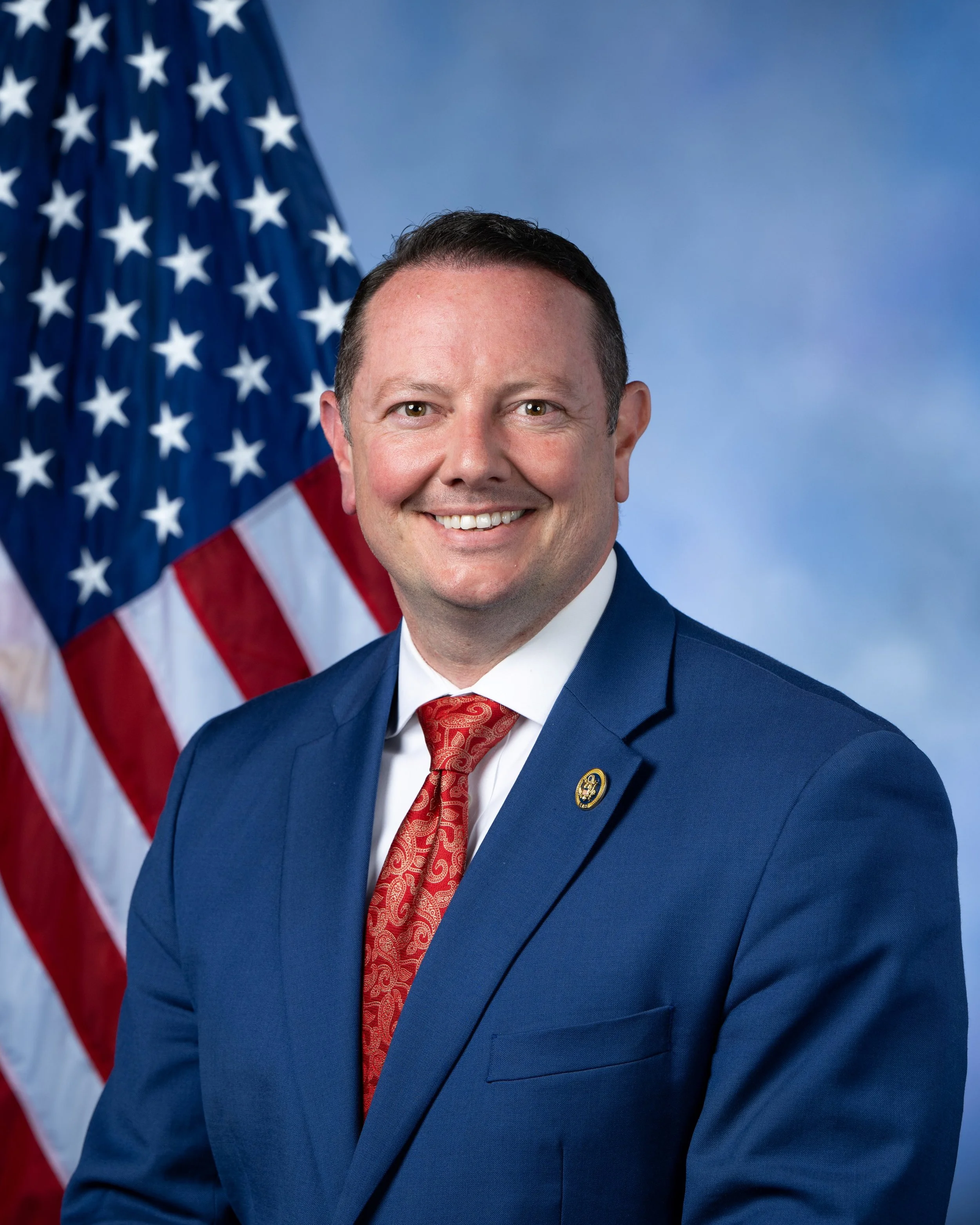
Representative Eric Burlison of Missouri’s 7th District has emerged as one of Congress’s most active voices in the push for transparency on Unidentified Anomalous Phenomena (UAP).
Proud of his Midwestern roots, Burlison has not only delved into the details of the issue but also taken concrete steps, most notably by hiring former senior intelligence officer and UAP whistleblower Dave Grusch to his staff.
He approaches the UAP question with pragmatism and objectivity.
While he holds no firm position on whether the phenomena may be of non-human origin, he does not dismiss the possibility. Instead, he is focused on testing and verifying whistleblower claims – some of which he has been vocal about, though critics have at times misrepresented these remarks as his conclusions.
With a new UAP hearing expected on 9 September 2025, before the House of Representatives’ [Task Force on the Declassification of Federal Secrets](https://oversight.house.gov/subcommittee/task-force-on-the-declassification-of-federal-secrets/), where he serves as a member, Burlison told Liberation Times there could be as many as five witnesses called to testify, adding that he hopes at least four will appear:
“I got a memo from the staff about five potential witnesses we’re working on, and hopefully four of them will be at the hearing. So we’re narrowing in on the names.”
Burlison emphasised that the upcoming hearing is not just about testimony on the day itself, but about creating momentum for further action, stating:
“We have an opportunity to use this hearing to build on the conversations already happening and to get more information. I don’t want to say too much, but there is a mechanism available to this committee that we’ll be able to lean on after the hearing to gather more.”
When asked whether the committee might also subpoena hostile witnesses, those who would otherwise refuse to testify before Congress and who may have sought to obstruct transparency efforts behind the scenes, Burlison confirmed it was possible, adding that it could happen as soon as this year, only months after the expected upcoming hearing.
“Yes, it might be within a couple of months of the hearing this year.”
The possibility of hostile witnesses reflects a broader struggle between Congress and the intelligence community over access to information. Burlison admitted that his own experience has been eye-opening, particularly in seeing just how carefully guarded sensitive material is, commenting:
“What’s incredible to me is working with the intelligence community and seeing the level of complexity in how they protect information. It’s absolutely remarkable, and I’d say that’s been the most eye-opening part for me.
>
“As someone who truly believes this government belongs to the people – that the people own the government, not the other way around – it’s disturbing to see how powerful the intelligence community has become.”
Burlison’s frustration over how tightly the intelligence community guards information, and the very real possibility of facing ‘hostile’ witnesses, underscores the imperative for legislative reform.
Enter the [UAP Disclosure Act](https://drive.google.com/file/d/19nLTxNgLz0CJFHplEsrCkI-OHyR59sZ-/view) (UAPDA), spearheaded in the Senate by then Majority Leader Chuck Schumer and Senator Mike Rounds in July 2023.
Modelled explicitly on the JFK Assassination Records Collection Act, the bill is designed to establish an independent review board, empowered to collect, review, and declassify government records related to UAPs, including recovered technologies and biological evidence of possible advanced non-human intelligence.
Despite bipartisan backing, the UAPDA has faced repeated setbacks for the last two years. Its provisions were included in the Senate version of the 2024 National Defense Authorization Act (NDAA)but ultimately stripped out during conference negotiations, effectively blocking its entry into law.
The UAPDA has been filed again this year by Senate Minority Leader Chuck Schumer, with Senators Mike Rounds and Kirsten Gillibrand as co-sponsors.
In parallel, Burlison is working to build momentum for the measure in the House of Representatives.
Much of the previous resistance to the legislation is [alleged](https://www.liberationtimes.com/home/operation-kill-bill-how-world-changing-ufo-language-was-killed-and-sliced-up-into-little-pieces) to have come from former House Intelligence Committee Chair Representative Mike Turner. But with Representative Rick Crawford now leading the committee, Burlison is more optimistic, commenting:
“I think he \[Representative Rick Crawford\] would be much more likely to support the UAPDA than Representative Turner. I’ve had some very positive conversations with Rick —he’s a great guy.
>
“He’s kind of like Trump: a man of the people, from the salt of the earth here in the Midwest. It’s just a different attitude from people like us. So, based on those conversations, I feel like we’re in better hands with regard to the UAPDA.”
Although the disclosure act was reintroduced as an amendment to this year’s Senate NDAA, it has not yet been included in the Senate’s final draft.
That leaves it vulnerable, because any provision not firmly anchored in both the Senate and House versions of the bill is at high risk of being dropped during the conference process, the closed-door negotiations where lawmakers merge the two bills into a single package for the President’s signature.
With that in mind, Representative Burlison is working to embed the UAPDA language into the House version of the NDAA.
By ensuring the measure appears in both chambers’ bills, he hopes to strengthen its chances of surviving conference negotiations and ultimately becoming law. As he told Liberation Times:
“With the UAP Disclosure Act I’m working on, we’re trying to file the same language on the House side and make sure it stays in the Defense Authorization Act.”
Burlison’s push to strengthen the UAP Disclosure Act reflects his concern that the most sensitive programs remain almost entirely beyond Congress’s reach. In his view, true oversight requires pulling back the curtain on where control of these programs resides – within the White House itself – Burlison commented:
“From what I’ve learned – and I say this as someone who is not from the intelligence community and who didn’t serve in the military, so I’ve had to get up to speed based on what I’ve been told – the Office of the National Security Advisor \[the National Security Council staff\] is handling these \[UAP\] Special Access Programs.”
Sources also told Liberation Times that this alleged concealment is not confined to distant agencies or contractors, but operates directly under President Trump’s nose – protected by elements within the National Security Council and by entrenched career officials embedded in two key White House offices.
When asked whether President Trump is truly committed to investigating UAP – and whether he is aware of the level of secrecy embedded within his own White House – Burlison offered a measured assessment:
“I think that if he has the time and bandwidth, President Trump would \[investigate the UAP topic\]. To him, this isn’t as high-profile or high-priority as it is to some people, and I think he’s focuse
*[Read full article at Liberation Times]*